Relatively recently, when technical progress did not yet have today's impressive achievements, tattoo and permanent makeup artists had to practice their skills on live models. Self-doubt, fear of causing pain and doing something “wrong” were not the best helpers. And instead of developing skills in novice masters, they developed psychological constraints.
Fortunately, today any artist - beginner or experienced - can purchase a silicone mat for tattooing and, without fear or fear, develop skills from scratch or hone those already acquired to perfection.
What are tattoo training mats?
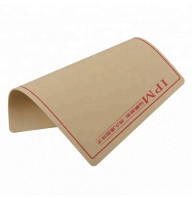
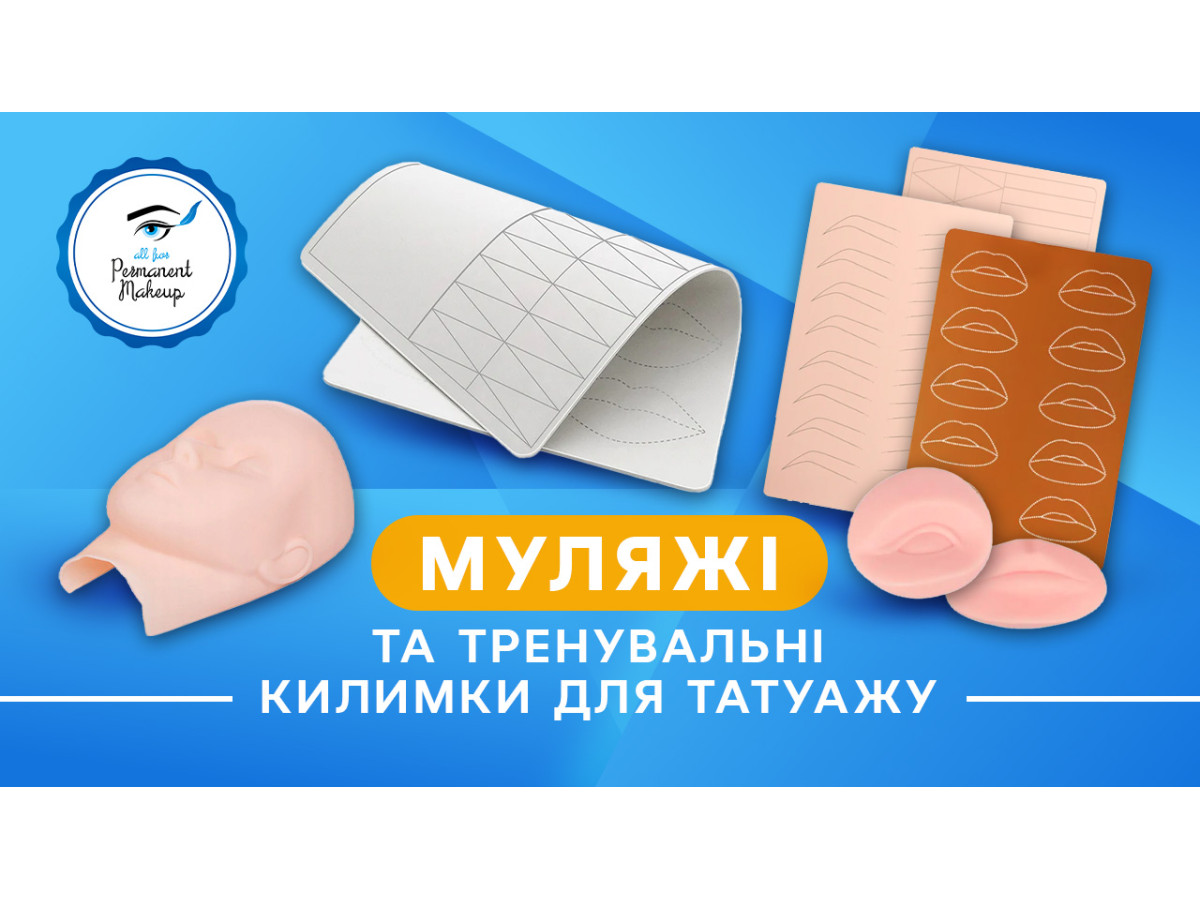
Permanent makeup mats are made in the form of a silicone panel on which the artist can hone his skills in applying pigments.
In the manufacture of such simulators, special silicone is used, with a certain density - this is important so that the “training aid” exactly imitates the elasticity and resistance force of real skin. Silicone mats should not be confused with artificial leather, which was used as a learning platform decades ago. This leather, made of PVC, does not correspond to the parameters of the real thing - it is stiffer and requires stronger pressure to immerse the needle. Therefore, the transition from a simulator to a “live” model can be painful in all respects - both for the model and for the master.
Why do you need training mats for tattooing?
A silicone mat for tattooing is an ideal opportunity for a beginner to enter the profession without stress and acquire almost all the skills necessary to start practicing. When working on the simulator, the same equipment and materials are used as in a real tattoo session, so the future artist develops the correct hand position, an “intuitive” understanding of the depth and frequency of immersion of the needle into the skin, the ability to weaken or increase pressure, etc.
A training session with a mat is carried out in exactly the same way as during a “real” session, therefore, when subsequently working with models, the novice permanent master already has the necessary knowledge and skills.
Such simulators are no less valuable for experienced professionals. New techniques and trends in permanent makeup appear with enviable regularity, and practicing them on mats is the most rational, safe, and cheapest solution.
What types of training mats are there?
Rugs can be classified according to several criteria. But the most important are the following.
Color
Transparent and beige rugs have become the most popular. Each of them has their own role in training a novice master.
Transparent
Made from colorless silicone, which allows you to clearly see the direction and depth of pigment penetration. These mats are ideal for honing the skill of pressing your hand evenly on the skin, which drives the dyes to the same depth.
Beige
The color of the silicone mimics your natural skin tone, which can range from light peach to tan. Such simulators bring training conditions as close as possible to “field” ones, and allow experimental observation of changes in the shade of pigment as it penetrates the skin. On such mats, beginning artists can acquire and improve the skill of selecting pigments depending on skin tone, which will subsequently simplify the same task when working with real clients.
Drawing
Silicone or latex artificial skin for tattooing can mean either a simple panel or a surface with a pattern applied to it.
With an image
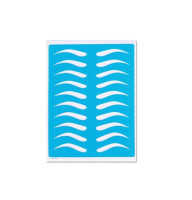
Schematic or realistic images of eyebrows, eyes (eyelids), and lips can be applied to the mat. Such drawings are intended to reinforce the skill of a “steady hand” and a sense of perspective, which allows you to evenly guide the tattoo machine in the desired direction.
One rug can depict several identical patterns or different variations in the shapes of lips, eyes, and eyebrows. In the second case, the simulator allows you to adjust the position of your hand when performing tattooing in different formats. This is very important for future practice with live models, since training on the same diagrams and drawings can “fix” both the master’s hand and his perception, which greatly reduces professional opportunities.
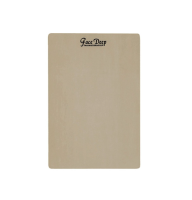
Without picture
You will need this tutorial for any improvisations or additional information. For example, even an experienced craftsman will need such a mat to check the operating functions and settings of a new machine or cartridges and needles that he has not yet dealt with. Also, such simulators will be useful for adapting to a new, more or less sensitive pedal, in the “transition period” when changing the type of machine - from rotary to induction or vice versa, etc.
Volume
Training mats for permanent makeup are available in two types: flat over the entire surface or with a functional relief.
Two-dimensional
Flat mats are useful for those who are just starting to learn. Simply place them on a flat surface and you can start training. As skills develop, it is recommended to place such mats on a three-dimensional dummy (if the actual model of the simulator allows this) in order to bring the training conditions closer to reality.
3D
Such rugs contain relief images of lips, eyelids, the whole complex - the upper or lower third of the face, etc. Volumetric simulators are indispensable at an advanced level of training, in which masters acquire the skill of automatically changing the position of their hands and machines depending on the topography of the area they are working with.
Texture
Beginners are recommended to start with smooth mats with a flat surface. Working with them makes it easier to understand the movements, pressure, direction, angle of the needle, etc., with the help of which certain tattoo results are achieved.
Silicone or latex for tattooing with a skin pattern applied to it (in the form of a relief) will be useful when mastering more complex and subtle techniques - hairline or microblading.
What are the benefits of tattoo training mats?
Training mats, without exaggeration, are indispensable when learning tattooing or when developing new professional skills from experienced artists. The benefits of such simulators are obvious:
- Maximum approximation to reality. The relief or pattern on the rugs has a complete anatomical correspondence with the structure of the human face. Thus, volumetric simulators for eye tattooing provide for the ciliary edge, the tear duct, the separation of the left and right eyes by the back of the nose and other features that in practice “complicate” the work of the master and require precise development of a number of skills. Also, eyebrow layouts or designs may imply different heights of the left and right eyebrows, or different angles of their bend - something that the master will constantly encounter when working with real clients. This factor teaches you not only to evaluate the features of the upcoming work at the stage of meeting the client, but also to find the right options for correcting asymmetry and other conditional defects. The structure of the silicone imitates the structure of the skin so well that it allows you to make several successive passes without tearing the silicone or forming other defects.
- Practicing the full tattoo cycle. Training mat for microblading, permanent lip makeup, etc. provides absolutely the same procedures and the same sequence as when working with clients. This allows you to develop automaticity of actions even at the training stage and eliminate errors of any kind in the future, when working with live models.
- Economical. The low cost of a silicone or latex trainer allows you to work with them for as long as it takes to hone the necessary skills. This eliminates potential financial risks when working with live models, when mistakes made due to inexperience need to be compensated one way or another. In addition, when working with a mat, you can use the cheapest pigments, since the goal of training is to “fill” your hand and achieve the required precision of movements and pressure, and not to create a tattoo masterpiece.
But the most obvious value of such exercise machines is that they can help you take stress “out of the equation.” It will not be a revelation to anyone that stress creates a whole cascade of negative reactions - from increasing self-doubt, physical and psychological “pressures” to refusal of further education. In addition, a stressful environment is the most serious barrier to professional growth, so practicing skills in calm conditions is a guarantee that a novice master can focus on his learning and improvement, leaving any negativity aside.
What are training dummies for tattooing?
Unlike mats, which are the simplest design, dummies are a more complex stage of training. They can be made in the form of the entire head, in the form of only the front part, in the form of the chest or only its top (for tattooing of the areolas). The value of such training material is that it allows you to bring training conditions as close as possible to real ones, since when working with three-dimensional models and flat mats, the hand is exposed to different loads.
The most popular option is a rug stand. It is a three-dimensional model of the head, on which a silicone mat is applied. Thanks to the exceptional plasticity of silicone, it adheres well to all bulges and depressions, which allows you to recreate the anatomically correct facial contour.
A more rational option is removable patches that imitate different parts of the face. So, you can put these mini-mats on the dummy for eye tattooing, and separately - for lip and eyebrow tattooing.
How to work with tattoo training products?
The sequence of training on training mats is determined by the mentor/course leader. As a rule, in the first lessons the simplest simulators are used, with straight parallel and oblique lines applied to them, which are needed to develop a “steady” hand. As students improve their skills, they move on to more complex mats, with two-dimensional and then three-dimensional models of individual parts of the face or the face as a whole.
The sequence of working with mats is exactly the same as when working with live models:
- A sketch of the design of eyebrows, arrows, eyelash edges, lips, areolas, etc. is applied to the training mat using a special pencil for permanent makeup. The same procedure can be performed using a transfer gel compatible with silicone or latex.
- Pigment is driven in according to the applied design - the same tattoo machine, cartridges or needles are used as when working with “live” skin.
- Excess pigment is removed with a cotton pad or non-woven cloth soaked in a solution of soap or another product suitable for silicone.
- After assessing the results, the master makes one or more passes to achieve the required filling density of the pattern.
For a more complete immersion in training, it is recommended to include in the training cycle, including treating the mat with antiseptics and simulating anesthesia (with an empty syringe). This approach allows you to work through the full cycle of a tattoo session and bring all the necessary skills to automaticity. The only limitation that real leather does not have, but silicone and latex do, is that it is not recommended to use transfer oil gels or pattern transfer techniques using Vaseline on rugs made from these materials. These substances can change the structure of the mat, which makes working with them difficult and can distort its results. So, a theoretical acquaintance with training mats took place. And to get acquainted with them in practice, you can order any model you like on our website and see for yourself: with such training aids you can really achieve the highest level of professionalism!