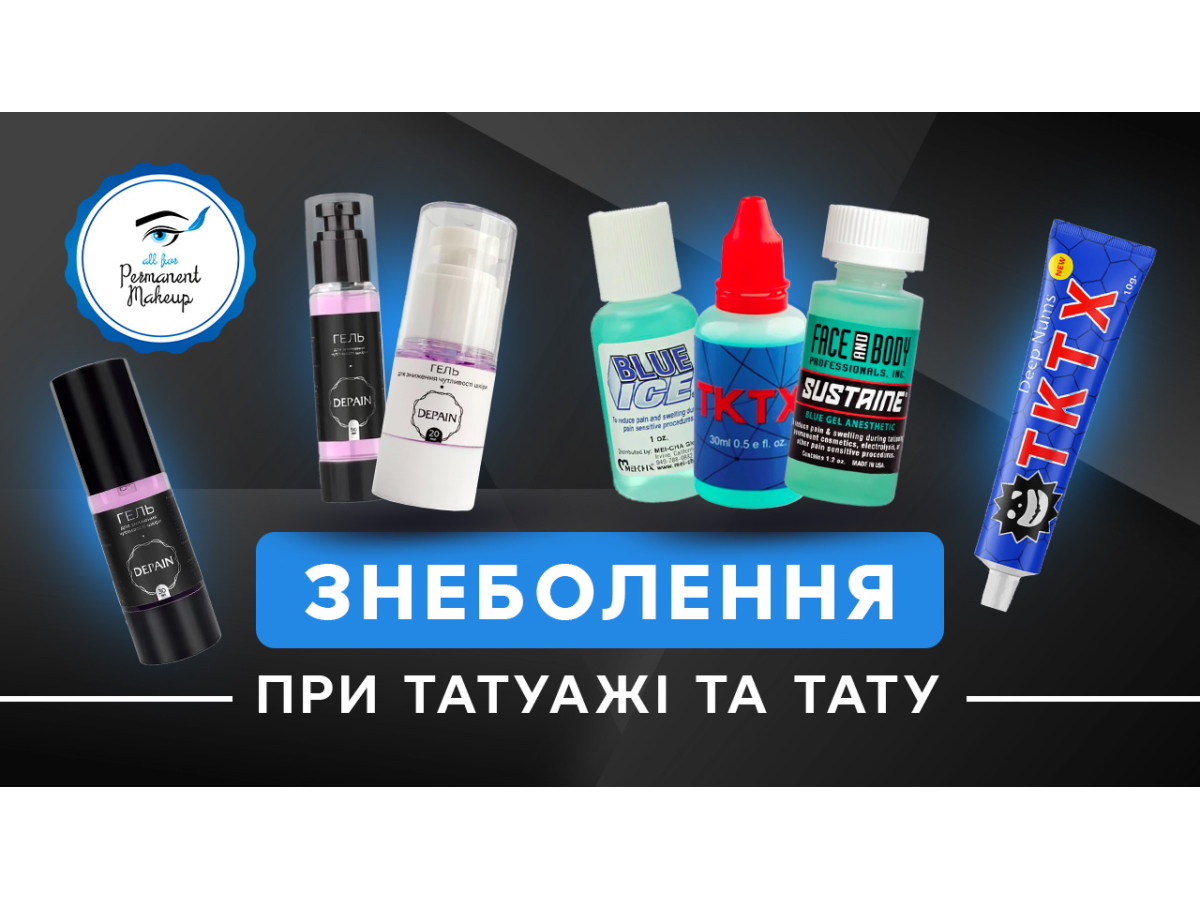
Today, those with tattoos or permanent makeup are less and less likely to hear the question “Did it hurt a lot?” This is not surprising, because the beauty industry around the world uses modern and very high standards of pain management. Today, visiting a tattoo studio is more like visiting a spa salon, where you can relax and unwind. And for this we have to thank the latest generations of tattoo anesthesia.
In our article we will introduce you to both the best representatives of this category of pharmaceuticals and the features of pain relief for tattooing.
The need for pain relief during tattooing and tattooing
Some clients of tattoo parlors and permanent makeup artists refuse anesthesia. There are several reasons for this: from the misconception that such drugs can harm health, to the desire to fully experience all the “pleasure” of the procedure.
But pain is not just an unpleasant and irritating sensation. This is a powerful and very useful signaling mechanism that developed in humans during evolution. Thanks to pain, we do not step on the injured leg and thus give it the opportunity to recover. Thanks to headaches, we limit activity and prevent harm to ourselves.
Short-term pain can be called healthy, but if it lasts long enough, it turns into pathological. It triggers a whole cascade of reactions, the leading one being inflammatory.
This is the first circumstance that explains why anesthesia for tattooing is so important - because it does not allow pain to complicate the healing process by the inflammatory process.
Another pitfall of pain is its reflex nature. In the event of a sharp sudden pain, any person reflexively, without meaning to, withdraws his hand, blinks, makes a sharp movement to the side, clenches his teeth, winces, etc.
And such movements are the last thing you need to create smooth contours, clear arrows, uniform shading, etc. But if there is no pain, there are no reflex reactions: the master can work calmly, and the client can not worry that because of his unintentional actions everything will go wrong.
And last but not least is the personal comfort of the client. No pain means you can just sit back and relax while the technician does his job. And the master is freed from stress and tension caused by the fact that his actions cause unpleasant sensations to a person.
The evolution of anesthesia in tattooing: from historical methods to modern technologies
The art of tattooing has existed for several thousand years, but until the mid-19th century, “anesthetics” were represented by alcohol or its analogues, extracts of datura, henbane and other poisonous or narcotic plants.
Such anesthesia only conditionally fulfilled its functions, but it disabled the patient’s nervous system for a long time, and in some cases even had fatal consequences - it was simply impossible to dose such “drugs” correctly.
But by the end of the 19th century, the so-called ether anesthesia became widespread. True, it was useless for permanent makeup, since it almost completely covered the face, but it helped well when creating tattoos.
After another fifty years, injectable anesthetic drugs began to appear on the pharmaceutical market - with countless side effects and contraindications. It was only in the second half of the 20th century that the development and production of fairly safe and truly effective agents began, including for local anesthesia.
The latest generations of such preparations are used today in permanent makeup. They allow you to minimize or even eliminate discomfort during the session, and relieve the client from pain in the first days after the procedure - until the pain naturally subsides during healing.
Types of anesthetics and painkillers in permanent makeup
All types of modern drugs that are used in tattooing can be divided into two separate groups: anesthetics and painkillers.
Anesthetic drugs
All such drugs, regardless of the form of release, have a common property: their mechanism of action. It is based on the fact that the active substance of the drug blocks impulses that are capable of receiving and transmitting nerve endings. Essentially, the anesthetic interrupts the path through which signals from the peripheral nervous system (which perceives irritation) are transmitted to the central nervous system (which interprets this signal as pain).
Thanks to this, the area in which the procedure is performed becomes insensitive or insensitive for some time (so much so that the master’s manipulations are only felt, but not perceived as unpleasant or painful).
At the stage of the session, only local anesthetics are used - their effect applies exclusively to the intervention area and does not affect the body as a whole.
Application means
These are drugs that are applied directly to the skin. The substances included in their composition “turn off” the first link of pain - skin receptors, as a result of which signals about pain are not transmitted further along the nerve chain, and the client simply does not feel it.
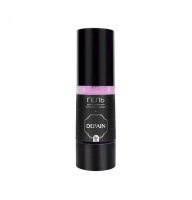
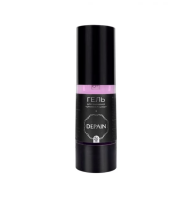
Such products can be mono- or multi-component. The first is the simplest option and is more often used for clients with a high pain threshold or in areas that are, by definition, less sensitive to pain. The second group of drugs includes several active ingredients that complement and enhance each other’s effects. These include, for example, Depain, a cream with a combination of lidocaine and prilocaine. When applied to the skin, it begins to act immediately, and the peak of its activity is observed 5-15 minutes after application. It acts strictly within the skin (from the epidermis to the dermis), and does not penetrate the bloodstream, while providing an anesthetic effect lasting up to 2-3 hours.
Injectables
This group of drugs is used in rare cases, as it has a number of disadvantages:
- • when the drug is administered, the skin is injured;
- • the introduction of even a small volume of the product deforms the skin (bloating, swelling is formed), which distorts the skin texture and can also distort the results of tattooing;
- • after a puncture of the skin, there is a release of blood, lymph, and intercellular fluid, which “erodes” the pigment.
The injection method of pain relief is used mainly for procedures that require deep immersion of the needle into the skin or for sessions of long duration, and in all cases requires appropriate qualifications from the master. But even in these cases, it is better to consider options with topical anesthetics in order to avoid unintentional errors and defects during tattooing.
Painkillers
These are systemic agents that are taken orally, mainly at home. In the vast majority of cases, there is no need for them, since to maintain a comfortable level of sensation for the client, specialized local products that are recommended by the master or given after the completion of the session are sufficient. If a client expresses a desire to “play it safe” and use additional painkillers for a tattoo, it is important to warn him that such drugs from the NSAID group can reduce blood clotting, which can slow down healing.
Types of anesthesia in permanent makeup
In modern permanent makeup, two types of anesthesia are used: primary and secondary.
Primary anesthesia
Primary anesthesia for permanent makeup is anesthesia, which is carried out before the start of the session. Its goal is to prevent the occurrence of pain and make the “start” of the procedure calm and comfortable for the client.
Preparations for primary anesthesia are available in the form of gels, ointments, suspensions, and cream-gel textures.
They include one or more anesthetic components (usually lidocaine, benzocaine, tetracaine, prilocaine, etc. in various combinations and excipients), as well as compounds that accelerate the penetration of anesthetics into the skin.
Primary anesthesia preparations are applied to intact skin 5-15 minutes before the scheduled time of the session. During this time, the active ingredients have time to have the desired effect, and once the procedure begins, the client does not feel pain (and often no manipulations by the master at all).
Depending on the manufacturer's recommendations, after applying the cream or gel, it may be necessary to cover the treated area with film. This is necessary to protect the drug layer from drying out, which reduces the effectiveness of penetration into the skin.
Secondary anesthesia
This anesthesia is carried out after the procedure is completed, using other drugs. They are designed to treat specifically damaged skin and become active precisely upon contact with wound surfaces after punctures. Such products have an immediate analgesic effect and can be used for several days after the procedure to make the client feel as comfortable as possible. In addition to direct action, secondary anesthetics have additional features. Upon contact with an open wound (namely, wounds, even microscopic ones, are punctures of the skin), the active substances have a vasoconstrictor effect and reduce the activity of lymph secretion. This promotes healing and shortens the overall recovery period.
You can buy a secondary anesthetic for tattooing in different release forms. They are produced in the form of liquids or liquid gels and creams that easily penetrate damaged areas of the skin.
When is anesthesia needed for tattooing?
Anesthesia is not needed at all, and anesthesia is always needed - both statements are wrong. Thus, permanent eyebrow makeup may not require pain relief at all, and even a minor effect on the skin of a highly sensitive person may require a full cycle of pain relief.
In short, everything is decided on an individual basis, after assessing the degree of sensitivity of the client. To do this, you can use various tests (ice cube between your fingers, pinch with increasing pressure, etc.).
Depending on the results, a different approach to anesthesia will be required:
- low sensitivity - the start of the procedure can be carried out without anesthesia, but the process will most likely require the application of an anesthetic;
- medium sensitivity - the procedure can be started only after primary anesthesia;
- high sensitivity - even after high-quality primary anesthesia, the client may complain of unpleasant sensations, which in most cases are caused not by physiological, but by psychological circumstances.
As for secondary anesthesia, this nuance should be taken into account. Modern secondary anesthetics are so effective that the client can simply forget about the procedure. And the absence of pain or discomfort means the absence of “signaling” about skin damage and, accordingly, the absence of restraining behavior. Therefore, it is important to focus the client’s attention on some restrictions that he must take into account. For example, in the first day or two after lip tattooing, do not eat solid food, do not use metal cutlery, etc., so as not to injure the mucous membrane or red border of the lips due to decreased sensitivity.
Features of the use of primary and secondary anesthesia
In permanent makeup, both universal and specialized anesthetics are used. The first group includes drugs that are used on any part of the face and body, including tattooing of areolas. But for particularly sensitive and vulnerable areas (for example, when tattooing the eyelids), it is recommended to give preference to products developed specifically for such areas. This ensures that the drug does not contain substances that irritate the conjunctiva, do not cause lacrimation and other reactions - either negative for eye health or interfering with the specialist.
These drugs include Eye Anesthetic Cream, designed specifically for such delicate areas as the eyelids. It is created taking into account all the features of the visual organs and is safe for use in this area. But with the same success it can be used in other areas.
Also keep in mind that applying anesthetic to delicate areas may be difficult or simply inconvenient. Therefore, make sure that the chosen product has a special dispenser, pipette, or other method of targeted and strictly dosed application of cream, gel, suspension, etc. Anesthetic wipes such as Goochie are successfully used in minimally “risky” areas. It is enough to apply napkins to the cleansed skin in the eyebrow area, give the drug 8-15 minutes to take effect, after which you can remove the napkin and any remaining anesthetic and begin tattooing. In all cases, when choosing a primary anesthetic, make sure that the amount of the active substance (lidocaine, benzocaine, etc.) does not exceed 6%. These compounds have the property of “tanning” the skin, making it denser, which will inevitably affect both the process of the procedure and its results.
All of the above is also true for secondary anesthetics. The selection of drugs should be based on the characteristics of the tattoo area and the specialization of the product. In the list of such products, we can separately highlight the Depain Ice line, which is equally suitable for secondary anesthesia of eyebrows or lips, and for anesthesia of eyelids. It contains no substances that irritate the mucous membrane of the eyes, so this drug is safe from an ophthalmological point of view.
And one last thing. Regardless of which tattoo anesthetic cream you choose to use, be sure to read the instructions for it. And every time you use it on a new client, conduct an initial survey of the person regarding his tendency to allergies and the presence of any of the diseases that are indicated as contraindications. And best of all, take the time to conduct a basic allergy test on your skin. This will prevent possible unwanted complications and make the session comfortable not only for the client, but also for you!